Search
Close this search box.
Chat Now

3. ASME B16.9 fittings

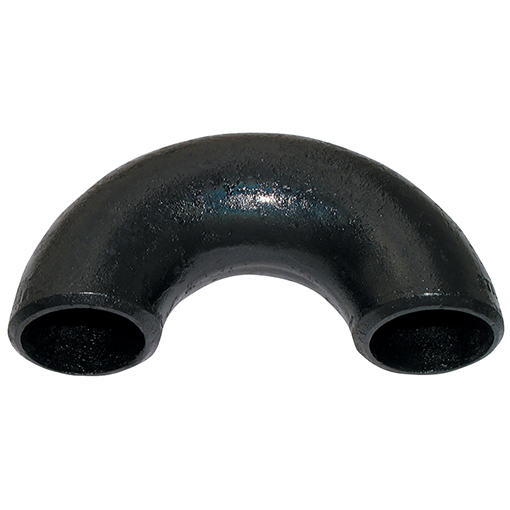
180˚ Return Short

Leave us a message​

Description

The 180˚ Return Short (also known as the 180˚ Long Radius Return Bend) is a type of pipe fitting that bends at a 180-degree angle with a long radius. This fitting is designed to smoothly redirect the flow of liquids or gases in a piping system, minimizing pressure loss and reducing wear and tear within the system.

Applications

  • Oil and Gas Industry: Used in oil and gas pipeline systems to efficiently change the direction of flow.
  • Chemical Industry: Applied in chemical plants to transport chemical liquids and gases.
  • Food and Beverage Industry: Utilized in the piping systems of food and beverage manufacturing plants to ensure smooth flow of ingredients.
  • Power and Energy Industry: Used in the cooling systems of power plants to control and direct the flow of cooling fluids.
  • Construction and HVAC Industry: Applied in HVAC (Heating, Ventilation, and Air Conditioning) systems to redirect airflow.

Standards

The 180˚ Return Short complies with ASME B16.9, an internationally recognized standard for wrought piping fittings, ensuring high-quality fittings that meet size, material, and manufacturing process requirements. ASME B16.9 standards clearly define:

  • Nominal Pipe Size (NPS): From 1/2 inch to 48 inches.
  • Outside Diameter (OD): The external diameter of the pipe.
  • Center to Center Distance: The distance from center to center of the pipe after a 180-degree bend.
  • Bend Radius (R): Usually 1.5 times the outside diameter of the pipe (R=1.5D).
  • Materials: Stainless steel, carbon steel, alloy steel, and other heat-resistant materials.
  • Manufacturing Process: Specifications for welding methods, machining, and quality inspection.

Dimensions and Thickness of 180˚ Return Short According to ASME B16.9

No.

NPS (inch)

OD (inch)

Center to Center (inch)

Radius (inch)

Thickness (inch)

1

0.5

0.84

2

1.5

0.109

2

0.75

1.05

3

1.5

0.113

3

1

1.315

3

2.25

0.133

4

1.25

1.66

4

2.5

0.14

5

1.5

1.9

5

3

0.145

6

2

2.375

6

3.75

0.154

7

2.5

2.875

7

4.5

0.203

8

3

3.5

8

5.25

0.216

9

4

4.5

12

6

0.237

10

5

5.563

15

7.5

0.258

11

6

6.625

18

9

0.28

12

8

8.625

24

12

0.322

13

10

10.75

30

15

0.365

14

12

12.75

36

18

0.375

15

14

14

42

21

0.375

16

16

16

48

24

0.375

17

18

18

54

27

0.375

18

20

20

60

30

0.375

19

24

24

72

36

0.375

Materials

  • Carbon Steel: Commonly used in oil, gas, water, and steam pipeline systems. It is popular due to its low cost and good mechanical properties.
  • Stainless Steel: Widely used in the chemical, food, and pharmaceutical industries due to its high corrosion resistance and durability.
  • Alloy Steel: High alloy steel is often used in applications requiring high strength and excellent corrosion resistance, particularly in the oil and gas industry.
  • Duplex and Super Duplex Stainless Steel: Used in applications requiring high corrosion resistance and harsh environments.
  • Nickel Alloy Steel: This material offers excellent corrosion resistance and is often used in chemical processing systems and high-temperature environments.
  • Ferritic, Austenitic, and Martensitic Stainless Steel: Each type has its unique properties and is used based on specific application requirements for corrosion resistance, hardness, and heat resistance.

Material summary table of 180˚ Return Short According to ASME B16.9 standard

Material Type

Description

Main Applications

Carbon Steel

Steel with high carbon content, good strength.

Oil, gas, water pipelines, heavy industry.

Stainless Steel

Corrosion resistant, durable in harsh environments.

Chemicals, food, pharmaceuticals, oil and gas.

Alloy Steel

Steel mixed with other elements to enhance specific properties.

Industries requiring high-performance materials.

Low Alloy Steel

Contains a small amount of alloying elements.

Manufacturing, construction industries.

High Alloy Steel

Contains a large amount of alloying elements like Nickel, Chrome.

Applications requiring high strength and corrosion resistance.

Low Carbon Steel

Steel with low carbon content.

Construction, manufacturing.

Medium Carbon Steel

Steel with medium carbon content.

Manufacturing, mechanical industries.

High Carbon Steel

Steel with high carbon content, very strong and hard.

Applications requiring high strength.

Ultra High Carbon Steel

Steel with very high carbon content.

Specialized industries, cutting tools manufacturing.

Inconel

Nickel-chrome alloy with high strength, corrosion, and heat resistance.

Aerospace, chemicals industry.

Monel

Nickel-copper alloy, strong corrosion resistance.

Chemicals, marine industry.

Hastelloy

Nickel-chrome-molybdenum alloy, high corrosion resistance.

Chemicals, oil and gas industry.

Copper

Corrosion resistant, good thermal and electrical conductivity.

Water piping systems, electrical conduits.

Brass

Copper-zinc alloy, corrosion resistant, easy to machine.

Water piping systems, decorative applications.

Titanium

Light, corrosion resistant, high heat resistance.

Aerospace, medical, chemicals industry.

Aluminum

Light, good corrosion resistance.

Aerospace, machinery manufacturing.

PVC

Corrosion resistant, light, easy to install.

Water piping systems, chemical conduits.

HDPE (High-Density Polyethylene)

Corrosion resistant, durable.

Water piping systems, chemicals conduits.

Similar product

Chat Zalo

0982384688