Search
Close this search box.
Chat Now

7. DIN flange standard

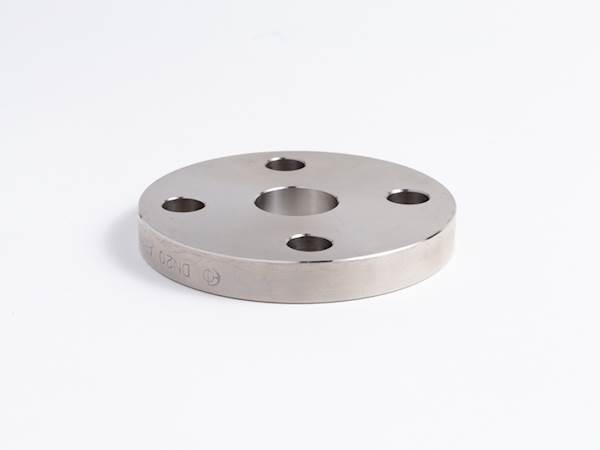
DIN 2576 Slip-On Flanges

Leave us a message​

Description

DIN 2576 Slip-On Flanges are flanges manufactured according to DIN 2576 standard. The main features of this type of flange include:

  • Material: Usually made from carbon steel, stainless steel, or other alloy.
  • Design: Slip-On Flanges are simple in design and are easily installed by simply sliding over the pipe and welding into place. The inside diameter of the flange is larger than the outside diameter of the pipe so that the pipe can slide in.
  • Size: Available in various sizes to suit different pipe types, complying with DIN 2576 standard.
  • Surface: Usually machined smooth to ensure tightness when mating with other flanges.

Applications

Slip-On Flanges DIN 2576 are widely used in many different industries due to their convenience and ease of installation. Some common applications include:

  • Oil and gas industry: Used in oil and gas pipeline systems.
  • Chemical industry: Used in chemical piping systems.
  • Food and pharmaceutical industry: Used in piping systems for water and other liquids.
  • Construction industry: Used in water supply and drainage systems and air conditioning.

Standards

DIN 2576 standard specifies the technical and dimensional requirements for Slip-On Flanges, including:

  • Nominal size (DN): From DN 10 to DN 600.
  • Nominal pressure (PN): PN 10.
  • Materials: Carbon steel, stainless steel, and other alloys.
  • Bolt hole size: Clearly specified for each nominal size.
  • Flange thickness and outside diameter: Specified to ensure pressure resistance and durability.

DIN 2576 Slip-On Flanges Dimensions and Thickness Table

Nominal size (DN) Nominal size (inch) Outer diameter (D) Hole diameter (d) Flange thickness (t) Bolt diameter (k) Number of bolt holes Bolt diameter (d1)
DN 15 1/2 95 15.5 12 65 4 14
DN 20 3/4 105 20.5 14 75 4 14
DN 25 1 115 26.5 14 85 4 14
DN 32 1 1/4 140 32.5 16 100 4 18
DN 40 1 1/2 150 38.5 16 110 4 18
DN 50 2 165 50.5 18 125 4 18
DN 65 2 1/2 185 66.5 18 145 4 18
DN 80 3 200 82.5 20 160 8 18
DN 100 4 220 102.5 22 180 8 18
DN 125 5 250 127.5 22 210 8 18
DN 150 6 285 152.5 24 240 8 23
DN 200 8 340 202.5 24 295 8 23
DN 250 10 395 257.5 26 350 12 23
DN 300 12 445 307.5 26 400 12 23
DN 350 14 505 357.5 26 460 16 23
DN 400 16 565 407.5 28 515 16 27
DN 450 18 615 457.5 28 565 20 27
DN 500 20 670 507.5 30 620 20 27
DN 600 24 780 610.5 30 725 20 30

Note:

  • Nominal size (DN) : Nominal size of flange in metric system.
  • Nominal size (inch) : Nominal size of flange in inches.
  • Outside diameter (D) : Outside diameter of the flange.
  • Hole diameter (d) : Diameter of the center hole of the flange.
  • Flange thickness (t) : Flange thickness.
  • Bolt diameter (k) : Distance between bolt holes.
  • Number of bolt holes : Number of bolt holes on the flange.
  • Bolt diameter (d1) : Diameter of the bolt hole.

Summary table of materials commonly used to manufacture DIN 2576 Slip-On Flanges

Material Type Description Main Applications Special Features
Carbon steel High carbon steel, usually ASTM A105 Oil and gas pipeline systems and heavy industries High load capacity, low cost
Stainless Steel Steel containing at least 10.5% chromium, usually grades such as ASTM A182 F304, F316 Food, pharmaceutical, chemical industry Good corrosion resistance, shiny surface
Alloy steel Steel containing other alloying elements such as nickel, molybdenum, vanadium, usually ASTM A182 F11, F22 Oil and gas, chemical, high temperature applications Good heat and corrosion resistance
Cast iron Iron alloy with high carbon content, usually ASTM A126 Class B Water system, wastewater treatment High compressive strength, low cost
Aluminum Lightweight metal, commonly used in non-corrosive environments Light industry, gas pipeline system Light weight, easy to process
Copper and Copper Alloys Metals that have good electrical and thermal conductivity, usually ASTM B62 Water supply system, electrical equipment Good corrosion resistance, easy to process
Plastic Industrial plastics such as PVC, CPVC, PTFE Chemical industry, water treatment, gas systems Corrosion resistant, lightweight
Titanium Lightweight, highly corrosion resistant metal, typically ASTM B381 F2 Aviation, medical, chemical industries Very good corrosion resistance, light weight, high temperature resistance

Similar product

Chat Zalo

0982384688