Search
Close this search box.
Chat Now

5. ANSI flange standard

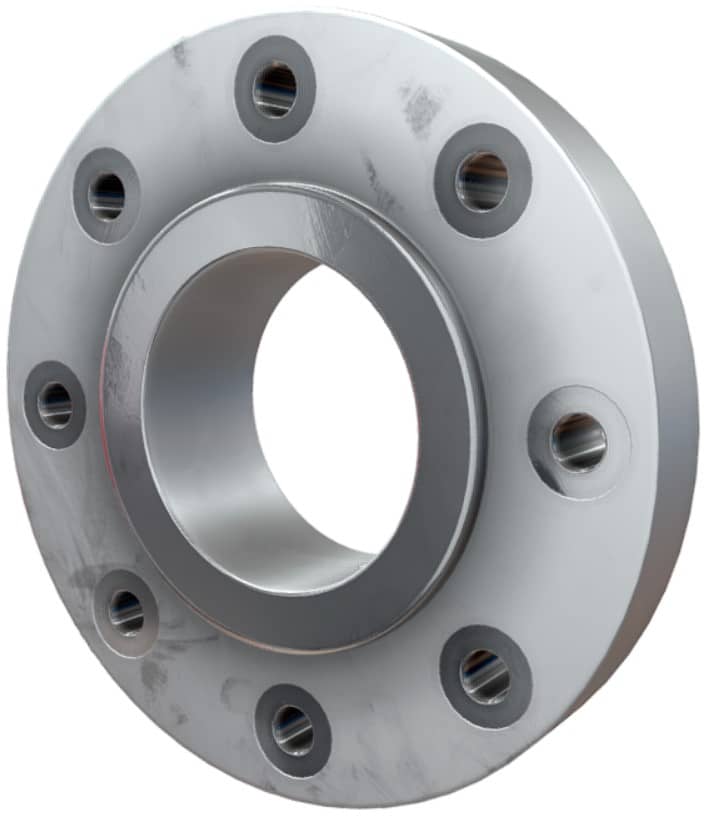
Flanges Slip On

Leave us a message​

Product Description:

Slip On flanges , also known as SO flanges, are a type of equipment commonly used in piping systems. This type of flange is placed on the pipe and then welded to both the inside and outside to increase durability and prevent leaks.

Application:

Slip On flanges are widely used in various industries including:

  • Oil and gas industry: Used in oil pipeline systems and instruments.
  • Chemical industry: Used in chemical pipeline systems where high strength and good corrosion resistance are required.
  • Water industry: Used in water supply and drainage systems and wastewater treatment.
  • Food and beverage industry: Used in beverage and product manufacturers where high hygiene requirements are required.
  • Shipbuilding industry: Used in ship piping systems.

Standard version :

The ANSI (American National Standards Institute) standard specifies the technical and dimensional requirements for Slip On Flanges, including factors such as size, material, and pressure resistance. Below are the key details from the ANSI B16.5 standard for Slip On Flanges.

Size:

  • Nominal Diameter (NPS): Size standards for Slip On flanges range from NPS 1/2 to NPS 24.
  • Inside Diameter: The inside diameter of Slip On flanges is larger than the outside diameter of the pipe so that the pipe can slide into it.
  • Outer Diameter: Optional outer diameter size depends on site performance (Grade).
  • Thickness (C): The thickness of the product is determined based on the display and the size of the product.
  • Bolt size: Specifies the number, diameter and spacing of bolts.

Material:

  • Carbon Steel: ASTM A105, ASTM A350 LF2
  • Stainless Steel: ASTM A182 F304, F316
  • Alloy: ASTM A182 F11, F22
  • Others: Other materials suitable for specific technical requirements and usage environment.

Application – Temperature:

  • Class 150: Apply performance 150 psi, use in the performance of system.
  • Class 300: Applies to 300 psi rating.
  • Class 600: Applies to 600 psi rating.
  • Class 900: Applies to 900 psi rating.
  • Class 1500: Rated pressure 1500 psi.
  • Class 2500: Rated pressure 2500 psi.
  • Application – Temperature Charts: Provides charts for each material type, helping to determine maximum performance at different temperatures.

Slip On Flanges Dimensions and Thickness Table (ANSI B16.5)

NPS (inch)

Outside diameter (OD) (inch)

Inside Diameter (ID) (inch)

Flange Thickness (C) (inch)

Bolt diameter (B) (inch)

Number of bolts

Bolt hole diameter (D) (inch)

1/2

3.50

0.62

0.56

2.38

4

0.63

3/4

3.88

0.82

0.62

2.75

4

0.63

1

4.25

1.05

0.69

3.12

4

0.63

1 1/4

4.62

1.34

0.75

3.50

4

0.63

1 1/2

5.00

1.61

0.81

3.88

4

0.63

2

6.00

2.07

0.88

4.75

4

0.75

2 1/2

7.00

2.47

0.94

5.50

4

0.75

3

7.50

3.07

1.00

6.00

4

0.75

4

9.00

4.03

1.12

7.50

8

0.75

5

10.00

5.05

1.19

8.50

8

0.88

6

11.00

6.07

1.25

9.50

8

0.88

8

13.50

8.07

1.38

11.75

8

0.88

10

16.00

10.10

1.50

14.25

12

1.00

12

19.00

12.10

1.62

17.00

12

1.00

14

21.00

14.12

1.75

18.75

12

1.13

16

23.50

16.12

1.88

21.25

16

1.13

18

25.00

18.12

2.00

22.75

16

1.25

20

27.50

20.12

2.12

25.00

20

1.25

24

32.00

24.12

2.25

29.50

20

1.38

Explanation of symbols:

  • NPS (Nominal Pipe Size): Nominal size of pipe.
  • OD (Outside Diameter): The outside diameter of the facade.
  • ID (Inside Diameter): The inside diameter of the facade.
  • C (Thickness): Depth of the face.
  • B (Bolt circle diameter): Bolt circle diameter.
  • Number of Bolts: Number of bolts required to attach the trim.
  • D (Bolt hole diameter): Bolt hole diameter.

Slip On Flanges Material Summary

Material type Standard materials Material description Typical applications
Carbon Steel ASTM A105 Steel for steelmaking, used for waste pipe products Low to medium flow pipeline systems, oil and gas, chemical
ASTM A350 LF2 Low alloy, low temperature carbon steel Low temperature applications, refrigeration systems
Stainless Steel ASTM A182 F304 Stainless Steel 304 Water treatment systems, food and beverage, chemicals
ASTM A182 F316 316 stainless steel, high corrosion resistance Chemical systems, seawater, petrochemical industry
Steel alloy ASTM A182 F11 Cr-Mo alloy steel, heat resistant High temperature system, boiler, energy industry
ASTM A182 F22 Cr-Mo alloy steel, higher heat resistance than F11 High temperature and performance system
Nickel Alloy ASTM B564 UNS N04400 (Monel 400) Nickel-copper alloy, good corrosion resistance Chemical industry, seawater, highly corrosive environments
ASTM B564 UNS N06625 (Inconel 625) Nickel-chrome alloy, corrosion and heat resistant High temperature, high corrosion systems, aerospace industry
Galvanized steel ASTM A105 + Hot Dip Galvanized Hot dip galvanized steel Outdoor system, wet environment, anti-corrosion

Explanation of symbols:

  • ASTM: American Society for Testing and Materials – American Society for Testing and Materials.
  • F304/F316: Stainless steels with different Cr and Ni contents, the number after F is the steel type number.
  • LF2: Low alloy carbon steel, used in low temperature environment.
  • F11/F22: Alloy steels with different Cr-Mo steel grades, the number after F is the steel grade number.
  • UNS N04400 (Monel 400): Nickel-copper alloy, known for its good corrosion resistance.
  • UNS N06625 (Inconel 625): Nickel-chrome alloy, with very high heat and corrosion resistance.
  • Hot-dip galvanizing: Hot-dip galvanizing process to protect steel from rust and corrosion.

Similar product

Chat Zalo

0982384688